My First Gun: What Transfer Day Is Really Like For Women Beginners
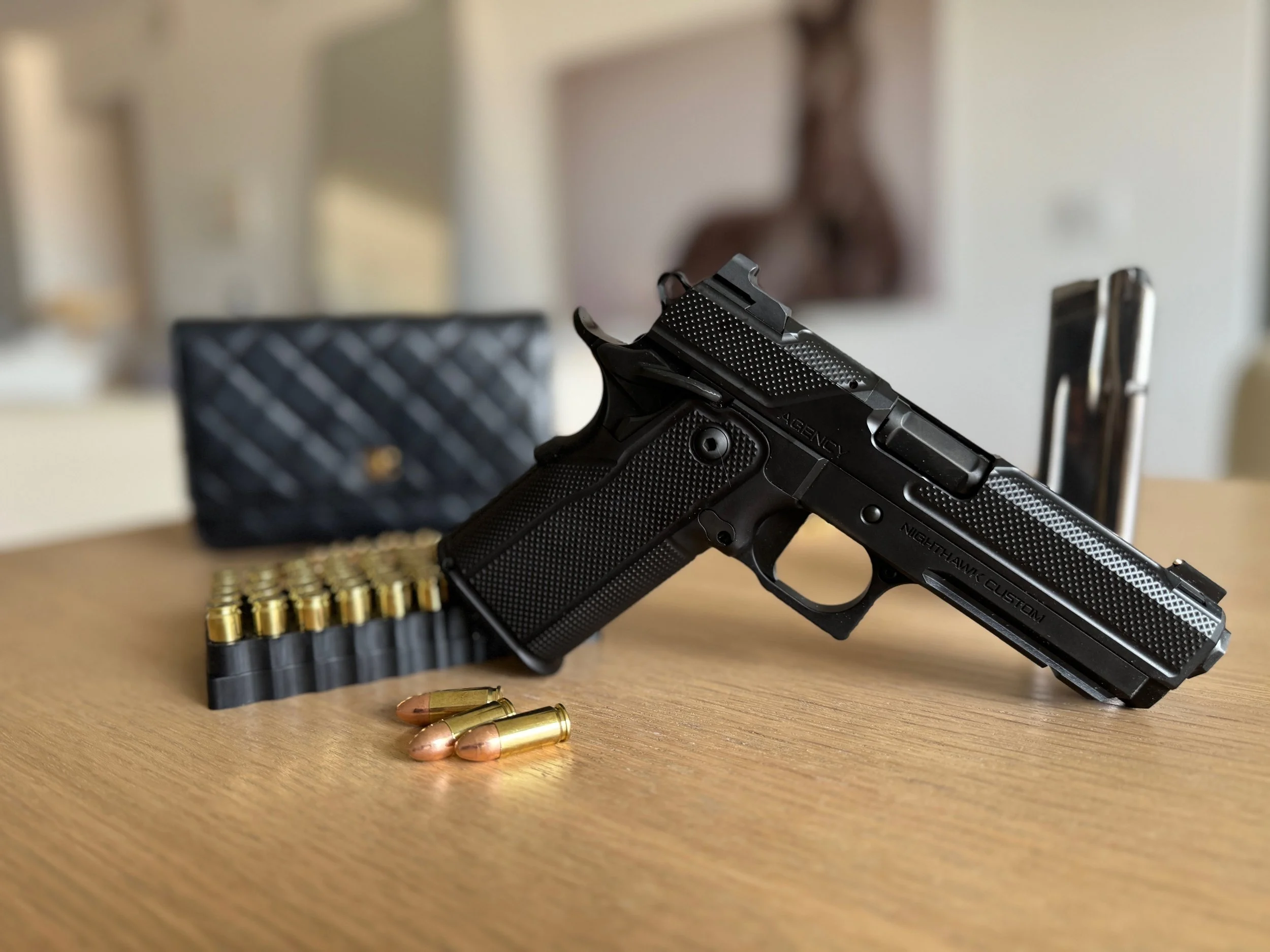
For a lot of women, picking up their first firearm is a moment they've thought about for a long time. I know I had. And when the day finally came, I was surprised by how many feelings showed up.
I'll be honest with you. I was nervous going in.
Not the background-check kind of nervous, although yes, there was a moment standing at the counter filling out the paperwork where I thought, what if something goes wrong? Even when you know it won't, that thought shows up anyway.
The deeper nervousness was this: I had never shot this gun. Not once. I had researched it, wanted it, put it on layaway, finally just paid off the balance because I couldn't wait any longer, and I had never pulled the trigger on it. What if I got it home and didn't like shooting it? What if I'd just made the most expensive mistake of my life?
There was also something else I didn't expect to feel. A little embarrassed. The Nighthawk Custom Double Agent is a serious firearm. It is not a beginner's price point. And I'm three months in. Who buys something like this three months in?
Someone who learned, after years of doing the opposite, that fewer better things is always the right answer.
If you're feeling pressure to buy something before you're ready, I wrote about that too. My First Gun: What Women Beginners Need to Know Before They Buy covers exactly what I wish someone had told me before I started shopping.
I used to buy the cheaper version of things. Not because there's anything wrong with that, there isn't, but because I thought I was being practical. What actually happened is I was never quite happy with what I had, and I'd eventually buy more, or buy again, or wish I'd just gotten the thing I actually wanted in the first place. At some point I decided: get the thing you'll have for the rest of your life. Take care of it. Done.
That's how I ended up at the counter with paperwork in front of me and a Nighthawk I'd never shot waiting on the other side of it.
What the Transfer Process Is Actually Like for Women Buying Their First Gun
I caught a glimpse of it right as I was filling out the forms. And I just stopped for a second.
It was smaller than I expected. The photos online made it look bigger, more imposing. In person it was beautiful. Beautifully made, beautifully presented. Precision machined in a way that you can actually see and feel. I've shot a lot of rentals over the past three months, and my first range experience was not exactly inspiring. Picking up something that was mine felt completely different.
I finished the paperwork. The background check ran quickly. And then it was in my hands.
If you're a woman buying your first firearm and you've never done this before: you fill out a federal form at the dealer and a check runs through the FBI's NICS system. It takes just a few minutes. I won't pretend the thought "what if something goes wrong" didn't cross my mind. It did. It went fine.
The Lesson
I had booked a lesson with my instructor specifically for this day. New gun, new manual of arms, I wasn't going to just show up and figure it out alone. We went over everything first: the safety, how to lock the slide back, the basics of how this particular 2011 operates. Then we went to the lane.
The first thing I noticed was how flat it shoots. I've shot guns that push back into your hands, guns that surprised me with recoil I wasn't ready for. The Nighthawk just doesn't do that. The weight, it's a metal gun, heavier than what I'd been training on, works in your favor. The recoil is manageable in a way I wasn't fully prepared for. And the trigger. I don't have the vocabulary yet to describe a truly excellent trigger to someone who hasn't felt one, but when you pull it for the first time you understand immediately why people talk about it.
There were a few failures to feed during the lesson, four or five. I mentioned it to one of the staff afterward and he handed me some heavier ammunition and explained that Nighthawks are built to extremely tight tolerances. The break-in period is real, and it's normal. His words, more or less: his dad has three of them, and every one did the same thing early on. That was enough for me.
My magazine loader wasn't compatible with the Nighthawk's magazines. The gunsmith on staff looked at it, said he could fix that, and did. Which meant I could keep my gel manicure intact while loading. Non-negotiable. Loading the magazine by hand isn't hard at all on this gun. For some firearms I have to have a loader, but for the Nighthawk it's fairly easy.
What It Feels Like to Realize How Far You've Come
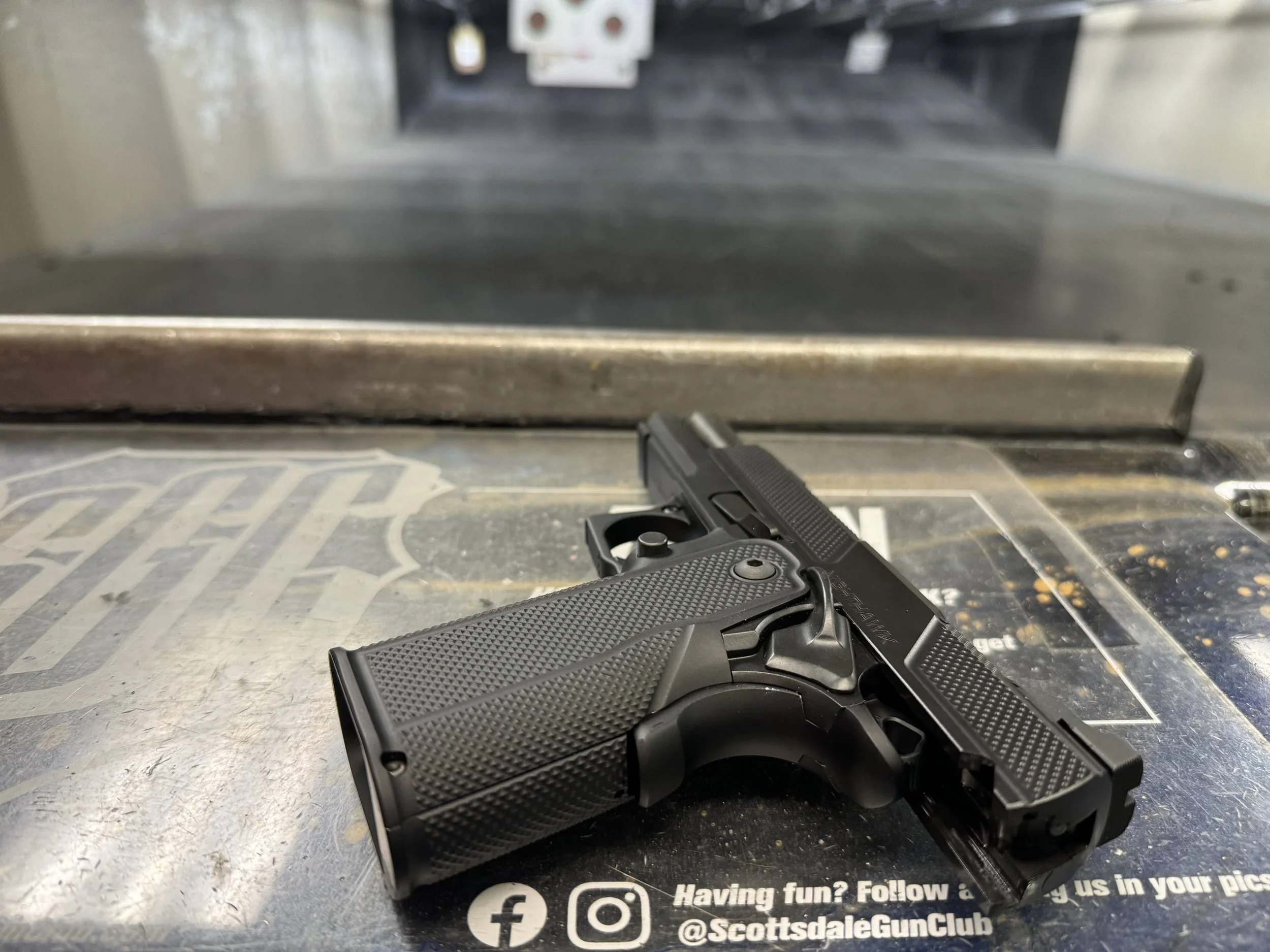
I had asked my husband to come. I wanted us to shoot it together on the day it arrived, and he actually left work on time, which, if you know him, tells you something about how seriously he took the invitation.
We hadn't been to the range together in six or eight weeks. When we got on the lane, I could see him watching me differently than he had the last time. Last time, my hands were shaking. I was jumpy. I flinched at every shot. This time I loaded my own magazines, ran the gun, cleared a jam when one came up, and shot accurately. He didn't say a lot. He didn't have to.
I warmed up at 10 feet, moved back to 15, then 20, then 25, then 30, then 35. Everything stayed tight. Not perfect, I'm three months in, I'm not going to tell you it was perfect, but tight. Consistent. Center mass, again and again.
"Nice work. You're very accurate." That's when the range master walked over. I told him it was my first day shooting my own gun. That I'd just picked it up that morning. He looked at it. "What kind is it?" "Nighthawk." "Damn."
When to Leave the Range, and Why Women Should Trust That Instinct
We left a little earlier than planned. Two men set up in the lane next to us, and it became clear quickly that their safety habits weren't where they needed to be. The range master handled it, firmly, immediately, the way it should be handled. But I've learned that when something feels off at the range, the right move is to finish what's in front of you, make sure your firearm is clear, and go home.
Situational awareness doesn't stop at the range door. It's a full-time habit worth building. If you want to go deeper on that, I wrote about it here: Situational Awareness for Women: Daily Habits That Actually Work.
So that's what we did. No drama. No announcement. Just: magazine empty, gun cleared, case closed, time to leave.
It was, genuinely, one of the best days I've had in a long time. Not because everything went perfectly. Because it went honestly: a little nervous, a little proud, a little humbled by two guys who almost ruined the vibe, and one range master who made it worth every penny.
One of the best things I did early on was setting up a dry fire practice routine at home with the Mantis Titan X laser dry fire system. It accelerates your progress between range sessions and you can do it in your living room. Worth every penny for a beginner.
I'm a student, not an instructor. Everything I share reflects my personal experience and ongoing training. Always follow the four fundamental safety rules, work with a qualified instructor, and know your local laws.

Megan Graham is a lifelong competitive athlete and two-time "Best of Boston" award-winning hair colorist with 24 years in the professional beauty industry. If you'd told her a few years ago she'd be building a firearms website for women, she would have laughed. Her introduction to shooting as an adult wasn't exactly inspiring. Wrong gun, overwhelming environment, long time away. But when a close friend nudged her back with the right gun, something clicked. As a competitive athlete, Megan has always believed confidence comes from preparation and practice. That belief led her back to the range. And kept her there.