Situational Awareness for Women: The Habits That Actually Keep You Safe
Before we talk about firearms, holsters, or any of the gear on this site — we need to talk about something more fundamental.
Because here's the truth: the most important personal safety tool most women have isn't a weapon. It's attention. And most of us have been trained, our entire lives, to give it away.
This is the post I wish someone had handed me years ago. It has nothing to do with firearms. It has everything to do with how you move through the world.
The Woman Who Gave Me My Armor
When I was preparing to move to a big city, an important woman in my life sat me down and said something I've never forgotten.
She told me I was going to need to put on a certain amount of armor.
She said: you're a very friendly person, and that's a beautiful thing — but in the city, you have to learn to look in the distance when you walk. You have to learn to look less approachable. You have to be very careful about engaging with strangers, because it's often in the moment of engagement that you're most vulnerable. She told me that when it feels safe to interact, I would know. But first, I needed to learn to observe. To move through spaces. To leave room between myself and people I didn't know.
And then she said something that has stayed with me ever since:
You have to be very careful about being nice.
She wasn't telling me to be cold or unkind. She was telling me something that took me years to fully understand: that women are socialized to prioritize other people's comfort, sometimes at the direct expense of their own safety. That the moment you're focused on being nice enough — polite enough, friendly enough, accommodating enough — is often exactly the moment you stop paying attention to what's actually happening around you.
She was right. She has always been right.
"I Didn't Want to Seem Rude"
Gavin de Becker wrote a book called The Gift of Fear that I want every woman reading this to put on her list immediately. His central argument is simple and radical: fear is not a weakness. It's a signal. Your instincts exist because they work, and overriding them in order to seem polite is one of the most dangerous things a person can do.
He documents case after case where women ignored their gut — where something felt wrong and they talked themselves out of it because they didn't want to make a scene, didn't want to offend anyone, didn't want to seem paranoid — and paid a terrible price for it.
"I didn't want to seem rude" is one of the most dangerous sentences in the English language.
I am not blaming women for anything that happens to them. What happens to women is heartbreaking and it is not their fault. But I do believe that giving ourselves permission to trust our instincts — fully, without apology, without worrying about anyone else's feelings — is one of the most important things we can do for ourselves.
Your gut feeling is not paranoia. It's data.
Put Your Phone Away
Let's start with the most practical thing, because it's also the most ignored.
When you are walking in public — to your car, through a parking lot, from one place to another — your phone should be in your bag or your pocket. Not in your hand. Not at your face.
I know. I know.
But here is the simple, inarguable truth: you cannot be aware of your surroundings when you are looking at a screen. You cannot notice the person who has changed direction twice to match yours. You cannot see the exit. You cannot read the room. Your entire field of attention has been funneled into a four-inch rectangle and everything happening around you is invisible.
The same goes for headphones. Music and podcasts are wonderful. They are also, in certain environments, a way of removing yourself from your surroundings entirely. I don't wear headphones in public. Not because I live in fear, but because I want to hear what's happening around me.
This isn't about anxiety. It's about attention. There's a difference.
Transitions Are When You're Most Vulnerable
If there's one concept I want you to walk away from this post with, it's this: transitions are high-risk moments.
A transition is any moment when you're moving from one environment to another. Walking to your car. Leaving a restaurant. Getting off an elevator. Moving from a well-lit area to a darker one. These are the moments when your awareness tends to drop — you're thinking about where you're going, fumbling for your keys, checking your phone — and they are precisely the moments that require the most attention.
I pay close attention during transitions. I'm not rushing, I'm not distracted, and I'm not on my phone. I'm present.
Some specific habits I've built around transitions:
In parking lots: I'm aware before I get there. I scan before I walk. I have my keys ready before I leave the building — not standing at my car door digging through my bag.
When entering a new space: I scan the exits. Every time, every place. It takes two seconds and it becomes automatic. I'm not doing it out of fear — I'm doing it because knowing where the exits are is just sensible.
When leaving: I pay attention to who else is leaving at the same time and in the same direction.
None of this is dramatic. It's just paying attention.
Watch the Hands
This one sounds simple and it's incredibly useful.
When you're reading a situation — when something feels slightly off and you're trying to figure out why — watch the hands, not the face. Faces are expressive and easy to read, but they're also easy to control. Hands are where the actual threat comes from, and hands tell the truth.
This is something trained professionals know. It's worth knowing too.
Trust Your Instincts Without Apologizing For Them
I made an agreement with myself a long time ago: I will never talk myself out of a gut feeling in order to protect someone else's feelings.
If a situation feels wrong, I leave. If someone makes me uncomfortable, I create distance. If I need to cross the street, change direction, or walk back into a building I just left — I do it. Without explaining myself. Without worrying about whether I'm being fair to the other person. Without second-guessing whether I'm overreacting.
You are never overreacting when you are protecting yourself.
The cost of trusting a false alarm is mild awkwardness. The cost of ignoring a real one can be everything. That is not a close calculation.
Give yourself full permission to follow your gut. Every time. Without apology.
Don't Engage When You Don't Have To
This is the one that feels counterintuitive because we're taught that being warm and responsive is a virtue.
And it is — in the right context.
But engaging with someone you don't know, in a situation that already has you slightly on edge, splits your attention at exactly the moment you need it most. You cannot fully observe a situation while you are actively participating in it. Engagement narrows your focus. Distance gives you information.
You don't owe anyone a conversation. You don't owe anyone a smile. You don't owe anyone an explanation for why you're not engaging.
Moving through a space calmly, without making eye contact, without inviting interaction — that is not rudeness. That is armor. And sometimes armor is exactly what the situation calls for.
None of This Is About Fear
I want to be clear about something before I close.
I don't live in fear. I don't walk around anxious or hypervigilant or assuming the worst about everyone I encounter. That's not what this is.
This is about being present. It's about being the kind of person who notices things — who moves through the world with her eyes open, her attention available, and her instincts respected.
Thoughtfully prepared doesn't mean armed and afraid. It means aware. It means practiced. It means that if something goes wrong, you gave yourself the best possible chance — not because you were paranoid, but because you were paying attention.
The firearm, if you carry one, is the absolute last resort. Everything in this category is what comes before it.
Start here. Build these habits. They cost nothing and they matter enormously.
One book I genuinely recommend: The Gift of Fear by Gavin de Becker. It will change how you think about your own instincts. It's not a scary book — it's an empowering one.
Want to read more about the La Femme Defense approach to preparedness?
Frequently Asked Questions
What is situational awareness and why does it matter for women? Situational awareness means knowing what's happening around you — who's near you, where the exits are, what feels off, what's changed. For women specifically it matters because we face a disproportionate share of certain threats, and attention is the first and most powerful layer of protection. A firearm is a last resort. Awareness is what comes before everything else.
What is The Gift of Fear about? The Gift of Fear by Gavin de Becker is a book about trusting your instincts. De Becker argues that fear is not weakness — it's a signal your brain sends when it has detected something wrong, often before your conscious mind has caught up. The book is specifically relevant to women because it addresses how social conditioning to be polite and accommodating can override survival instincts. It's one of the most important books I've ever read on this topic.
Why is being on your phone dangerous in public? Because attention is finite. When your eyes are on a screen you cannot fully process what's happening around you — who's near you, who's changed direction, what feels wrong. You become visibly distracted and less aware, which makes you a more attractive target. The habit of putting your phone away during transitions — walking to your car, moving through a parking lot — is one of the simplest and most effective safety habits you can build.
Is it rude to ignore strangers or avoid eye contact in public? No. Moving through a public space without engaging is not rudeness — it's a boundary. You don't owe anyone a conversation, a smile, or an explanation. The social pressure women feel to be warm and responsive to everyone is real, but it's worth examining carefully. Your safety is more important than a stranger's comfort.
What does "watch the hands" mean in personal safety? It's a concept from professional threat assessment: when reading a situation, focus on a person's hands rather than their face. Faces are expressive and easy to control — people can smile while presenting a threat. Hands are where actual danger comes from, and they're harder to disguise. If something feels wrong and you're trying to understand why, look at what the hands are doing.
What are transition points and why are they dangerous? A transition is any moment when you move from one environment to another — leaving a building, walking to your car, getting off an elevator, moving from a lit area to a darker one. These moments tend to lower awareness because you're focused on where you're going rather than where you are. They're also moments when it's harder to call for help or retreat quickly. Paying deliberate attention during transitions is one of the highest-value safety habits you can develop.
I'm a student, not an instructor. Everything I share reflects my personal experience and ongoing training. Always follow the four fundamental safety rules, work with a qualified instructor, and know your local laws.
About the Author
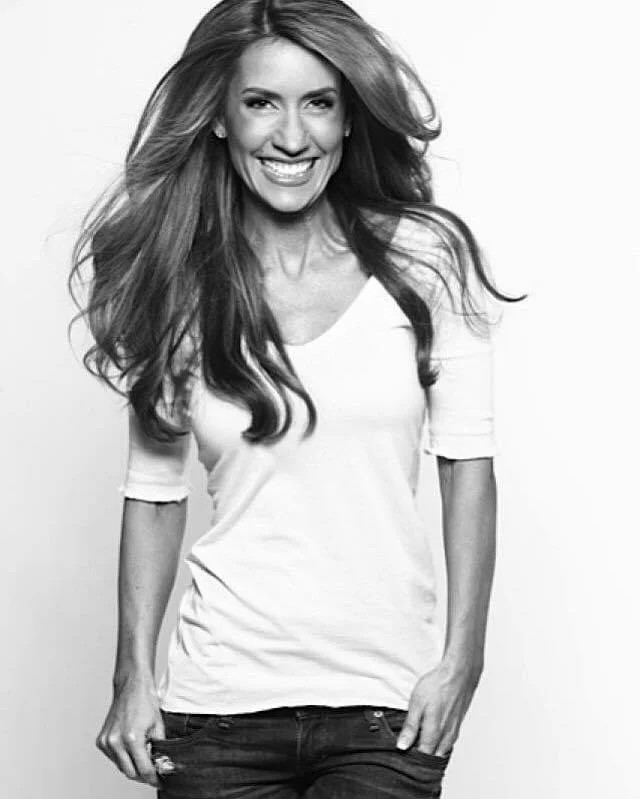
Megan Graham is a lifelong competitive athlete and two-time "Best of Boston" award-winning hair colorist with 24 years in the professional beauty industry. If you'd told her a few years ago she'd be building a firearms website for women, she would have laughed.
Her introduction to shooting as an adult wasn't exactly inspiring — wrong gun, overwhelming environment, long time away. But when a close friend nudged her back with the right gun, something clicked. As a competitive athlete, Megan has always believed confidence comes from preparation and practice. That belief led her back to the range. And kept her there.