Why My First Range Day Almost Kept Me Away From Guns Forever (And What Finally Brought Me Back)
I grew up in the Northeast, and when I was little, my dad used to let me shoot his .22. So guns weren't completely foreign to me. But I didn't touch one for a long, long time after that — and when I finally did, it almost put me off shooting for good.
When my husband and I moved out west, I always knew I wanted to learn how to shoot properly. I liked the idea of it. I liked the confidence I imagined it would give me. And about two years ago, my husband took me to an indoor shooting range for what was supposed to be my introduction.
The gun he handed me was a Glock 40.
Now, my husband is 6'2" and built like a strongman. A Glock 40 — which fires 10mm ammunition — is a seriously powerful handgun. For him, it was no big deal. He didn't think twice about it. But for me, a woman just learning to shoot for the first time, it was a lot. It hurt my hands. The recoil was jarring and uncomfortable. I felt like it was practically jumping out of my grip, and honestly? I was afraid I was going to drop it.
And the sounds. If you've never been to an indoor shooting range, nothing really prepares you for it. To me, every shot sounded like an explosion. Multiply that by every person shooting in that range at the same time, and it was genuinely unnerving.
I left that day and didn't go back for a long time.
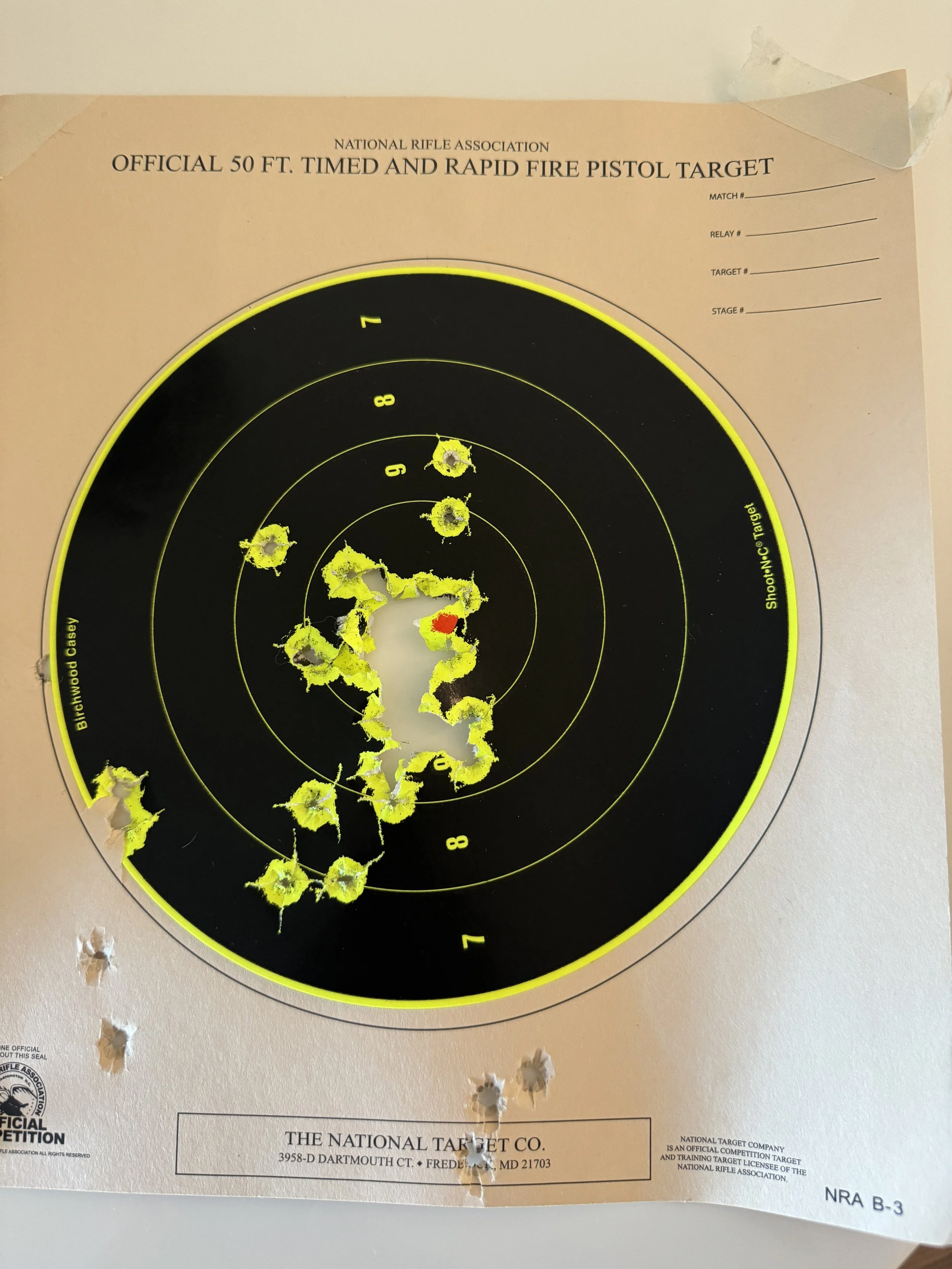
Day 1 at the range
Felt good after being nervous for two years.
It Wasn't Me. It Was the Gun.
Here's what I know now that I wish someone had told me then: a bad first experience at the range is almost never about the woman. It's almost always about the gun.
My husband wasn't trying to overwhelm me — he just handed me what he shoots. But what works for a large, experienced man is not the right starting point for a woman who has never really shot before. We process recoil differently. We have different hand sizes, different grip strength, and frankly, different relationships with fear and confidence when we're brand new to something.
If your first experience learning to shoot as a woman leaves you shaking, frustrated, or not wanting to go back — please hear me when I say: that is not a sign that shooting isn't for you. It's a sign you had the wrong gun.
The Friend Who Changed Everything
Fast forward about two years. A close friend of mine is really into firearms, and he kept nudging me. "We should go to the range together. I think you'd love it if you gave it another shot." (Pun intended.)
I told him about my experience with the Glock 40. He didn't dismiss it — he just said, "Don't worry. I'll bring something you can actually shoot comfortably. I promise."
So I went.
He let me try his X Macro first — not the easiest gun I've ever shot, but manageable. And then he handed me a 22 for beginners — and everything changed.
It was easy. It was fun. It was controllable. I could actually focus on my form, my stance, my grip — instead of just bracing for impact. And even though the sounds of the indoor range were still really hard for me — honestly, gunshots in an enclosed space still sound like explosions to me — I found myself thinking I want to come back.
That was new.
Why I Think a .22 Is the Perfect First Gun for Women
I want to be really direct about this because I think it matters: the best gun for women beginners is one you can actually shoot comfortably and confidently.
For most women who are just starting out, that's a .22.
Here's my thinking. If we're going to eventually carry for home defense, or pursue an everyday carry, we need to build real skills — grip, stance, trigger control, breath. You cannot build those skills if you're flinching every time you pull the trigger. You cannot build confidence if every shot feels like a punishment.
A .22 gives you the repetition you need without the intimidation. It lets shooting be something you enjoy, not something you endure. And enjoyment is what makes you come back. Coming back is what makes you good.
Instead of staying away from the range for two years because my first experience was so overwhelming, I could have been building skills the whole time — if someone had just started me on the right gun.
Finding My Place
The other thing that happened that day with my close friend was that I finally found a range where I felt genuinely comfortable. I'm not going to name it for privacy reasons, but I will say — everyone there was friendly, welcoming, and completely non-judgmental.
It actually reminded me of being back home on the East Coast, honestly — that kind of warm, unpretentious atmosphere where people are just happy you're there.
That matters more than people realize. Learning to shoot as a woman can feel intimidating, and the environment you're in makes a huge difference. When you feel welcome, you relax. When you relax, you shoot better. When you shoot better, you want to come back.
Where I Am Now
The sounds are still hard for me sometimes. I won't pretend otherwise. An indoor range is loud, and I knew going in that it was going to take time and repetition to get desensitized to it. But I also knew — that day with my close friend, shooting that .22 — that if I kept coming back, it would keep getting easier.
So I kept coming back.
I found an instructor — a retired police officer — and I started taking weekly lessons. I joined a gun club. I practice every week.
And very soon, I'll be picking up my first Nighthawk Custom 1911 from my FFL.
But that's a story for another post. 😊
If you're a woman who had a bad first experience at the range and walked away — I see you. I was you. Come back. Start with a .22. Find your people. It gets so much better.
— Megan
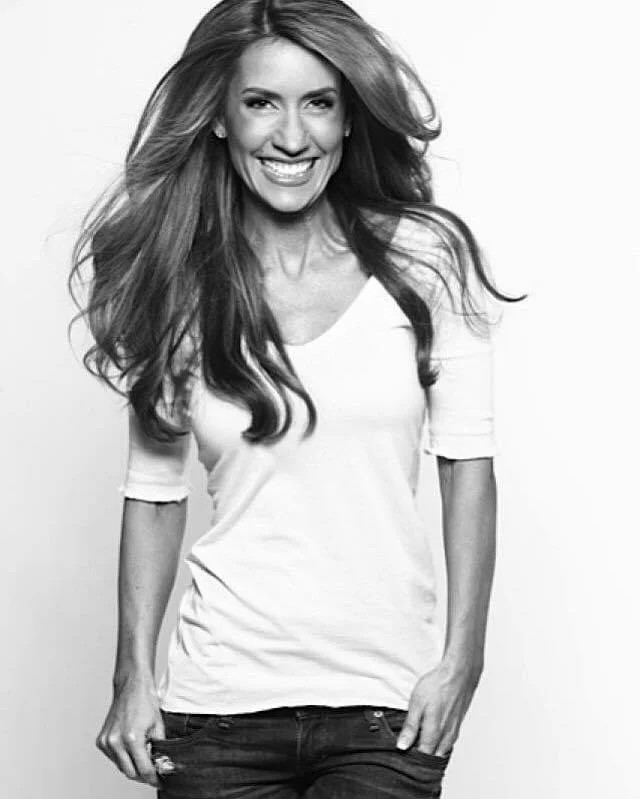
About Megan Graham
Megan Graham is a lifelong competitive athlete and two-time "Best of Boston" award-winning hair colorist with 24 years in the professional beauty industry. But if you'd told her a few years ago that she'd be building a website about firearms for women, she would have laughed.
Her introduction to shooting as an adult wasn't exactly inspiring. The wrong gun, an overwhelming environment, and a long time away from the range. But when a close friend nudged her back in — with the right gun this time — something clicked.
As a lifelong competitive athlete, Megan has always believed that confidence comes from preparation and practice — and that belief is exactly what led her back to the range and kept her there.
She found an instructor she trusted, joined a gun club, and started showing up every single week. And the more she learned, the more she realized how many women had the exact same story she did: a bad first experience, a gap of time, and no one talking to them in a way that actually felt relatable.
That's why La Femme Defense exists. Not to be tactical or intimidating — but to be honest, feminine, and genuinely helpful for women who want to feel prepared without losing themselves in the process.
Megan lives out West with her husband and their very spoiled pets. She is Thoughtfully Prepared — and she's here to help you be too.
You May Also Be Wondering...
Is a .22 a good gun for women beginners? In my personal experience, yes — and I wish someone had told me that from the start. A .22 has very manageable recoil, is easy to control, and lets you focus on building real fundamentals like grip, stance, and trigger control without flinching every time you shoot. Confidence comes from repetition. A .22 gives you that repetition without the intimidation.
What should I expect at an indoor shooting range for the first time? Honestly — it's loud. Much louder than most people expect. Gunshots in an enclosed space sound like explosions, and that caught me completely off guard my first time. Good ear protection is non-negotiable. Give yourself grace if the sounds feel overwhelming at first. It does get better the more you go.
What is the best first gun for a woman? There's no single answer because every woman is different. But I'd start with something that has low recoil and fits comfortably in your hand. A .22 is a great starting point. What I'd avoid — at least at first — is anything too powerful before you've built confidence and proper technique.
How do I get over being nervous at the shooting range? Go with someone you trust. Start with the right gun. Find a range where you feel welcome and comfortable. And give yourself permission to take it slow. Nobody starts out feeling confident — confidence is built one range visit at a time.
The content on La Femme Defense is based on personal experience and is intended for informational purposes only. It is not a substitute for professional firearms training. Always follow safe gun handling practices and seek qualified instruction.